Preliminary assessment of adolescent idiopathic scoliosis prevalence and physiotherapeutic scoliosis specific exercises workforce needs in accessible areas of conflict-affected Syria
2026-08-04 | Volume 4 Issue 2 - Volume 4 | Research Articles | Mohamad Firas WahbehAbstract
This study presents the first local epidemiological data on adolescent idiopathic scoliosis (AIS) in conflict-affected Syria, addressing a critical lack of information. Screening 2,847 adolescents (mean age 14.0 ± 2.6 years; 59.9% female) across eight accessible governorates, the research identified a point prevalence of 2.49% (95% CI: 1.95%–3.14%), with a female-to-male ratio of 3.7:1. A significant 90.1% of confirmed cases exhibited mild to moderate curves (Cobb angle 10–39°), indicating suitability for Physiotherapeutic Scoliosis-Specific Exercises (PSSE) as per SOSORT guidelines.
An exploratory workforce model, applied to the surveyed accessible areas, projected a need for approximately 240 PSSE specialists under current constraints, rising to about 350 in a moderately optimistic scenario. While these projections are speculative due to the non-representative sample, they serve as a crucial initial benchmark. The study emphasizes that these findings are not for direct policy formulation but rather a compelling rationale for urgent, methodologically rigorous, and nationally representative epidemiological research. It highlights the theoretical demand for PSSE services and the imperative for context-adapted implementation frameworks in similar conflict-affected settings.
Keywords : Adolescent Idiopathic Scoliosis, Prevalence, Syria, Conflict-affected settings, Physiotherapeutic Scoliosis-Specific Exercises (PSSE), Workforce planning, SOSORT guidelines, Conservative management, Cross-sectional study, Public health in humanitarian crises.
INTRODUCTION
Adolescent idiopathic scoliosis (AIS) is a three-dimensional spinal deformity that typically manifests during the perpubertal growth spurt. While its etiology remains incompletely understood, its potential for progression and long-term morbidity necessitates early detection and structured management [1, 2]. The standard of care for mild to moderate curves (10-40°) increasingly incorporates Physiotherapeutic Scoliosis-Specific Exercises (PSSE) as a primary conservative intervention, aimed at halting curve progression, improving cosmetic appearance, and enhancing quality of life [3, 4, 6].
In stable, high-resource settings, the infrastructure for scoliosis screening and management is well-established. Conversely, in regions destabilized by prolonged conflict, such as the Syrian Arab Republic, the public health system faces catastrophic disruption [5]. Basic health services are fragmented, and specialized care for non-communicable, chronic conditions like AIS is largely non-existent. This creates a critical knowledge gap: the prevalence of AIS and the
capacity of the health system to manage it are entirely unknown. Without baseline data, it is impossible to advocate for resources, plan interventions, or train a necessary workforce.
This study represents a foundational, albeit preliminary, effort to address this void. It is not intended as a definitive epidemiological survey but rather as a prospective, exploratory analysis designed to generate initial estimates and catalyze a more formal, evidence-based approach to a neglected public health issue. By providing the first internally generated data on scoliosis prevalence and modeling workforce requirements, this paper aims to furnish national and international health stakeholders with a data-driven starting point for dialogue and strategic planning. The effectiveness of PSSE has been demonstrated in multiple randomized controlled trials [7, 8, 9, 14, 15]. Recent systematic reviews continue to support the efficacy of PSSE in managing adolescent idiopathic scoliosis [14, 15, 16].
MATERIALS AND METHODS
Study Design And Population
The study was not powered to detect a specific effect size, as it was designed as an exploratory prevalence estimation rather than a hypothesis-testing investigation. Post-hoc power analysis indicates that the observed sample (n = 2,847) provides 80% power to detect a prevalence difference of ≥1.5 percentage points between subgroups (e.g., male vs. female) at α = 0.05, assuming a baseline prevalence of 2.5%. The precision of the point prevalence estimate (2.49%) is quantified by a 95% Wilson score confidence interval of [1.95%, 3.14%], which accounts for the binomial sampling distribution more accurately than the Wald interval in low-prevalence settings. We caution that the finite population correction was not applied, as the target population (adolescents aged 10–18 in accessible governorates) is large and its exact denominator unknown. Consequently, the reported confidence interval may slightly overestimate precision. Future confirmatory studies should employ stratified random sampling with a minimum of n = 4,800 to achieve a margin of error ≤ 0.5% at 95% confidence.
Screening Protocol And Diagnostic Confirmation
The screening protocol was administered by a team of 20 physiotherapists who underwent a brief, hybrid training program. This included a 4 hour online theoretical module and an 8 hour in-person practical session for 14 of the participants. It must be emphasized that this training regimen is substantially abbreviated compared to the rigorous certification standards of international bodies like SOSORT, constituting a significant methodological limitation.
Screening involved two primary steps. First, visual and instrumental assessment was conducted using the Adam’s forward bend test to visually inspect for trunk asymmetry, followed by a quantitative measurement of the angle of trunk rotation (ATR) using a smartphone-based Scoliometer application. Workforce forecasting methodologies provide essential frameworks for estimating specialist requirements in underserved regions [11].
Smartphone Scoliometer: Instrument Specification and Validation
ATR quantification was performed using the (Scolio meter) smartphone Android application, selected based on its documented intra-class correlation coefficient (ICC) of ≥ 0.90 against standard mechanical Scoliometer in prior validation studies. The device was positioned perpendicular to the spinous processes at the level of maximal hump prominence during the Adam’s forward bend test, consistent with the International Scientific Society on Scoliosis Orthopaedic and Rehabilitation Treatment (SOSORT) procedural guidelines. To mitigate systematic measurement error, the following protocol was implemented: (a) all screening devices were calibrated against a mechanical Scoliometer (Baseline® Scoliosis Meter, Fabrication Enterprises, USA) prior to field deployment; (b) a standardized phone casing was used to ensure consistent device orientation; and (c) inter-rater reliability was assessed in a pilot sample of 20 adolescents, yielding an ICC of (95% CI). We acknowledge that smartphone Scoliometer, while pragmatically advantageous in low-resource settings, lacks the metrological traceability of dedicated mechanical instruments, and its accuracy is operator-dependent and susceptible to gyroscopic drift in non-ideal field conditions. An ATR of ≥7° was considered a positive finding warranting further investigation. Second, radiographic confirmation was obtained when adolescents with a positive screening result were referred to specialist orthopedic clinics for a standing posteroanterior radiograph. A definitive diagnosis of scoliosis was established based on a Cobb angle measurement of ≥10°, as per international consensus. All radiographic measurements were supervised by the principal investigator using Surgimap software to ensure consistency.
Radiographic Confirmation Rate And Potential AsCertainment Bias
While this may reflect the stringent referral threshold employed (ATR ≥ 7° combined with visible trunk asymmetry on Adam’s test), it substantially exceeds the positive predictive value (PPV) reported in systematic school screening meta-analyses (PPV ≈ 28–38% for Cobb ≥ 10°). Several
non-mutually exclusive explanations must be considered: (i) channeling bias, whereby only the most clinically apparent cases (higher ATR values) proceeded to radiography due to parental self-selection and logistical barriers; (ii) confirmation bias, as screeners were non-blinded to initial ATR measurements during radiographic assessment; and (iii) verification bias, given that 55.1% of screen-positive cases were lost to follow-up, potentially comprising a disproportionate number of false-positive screeners with transient postural asymmetries. We explicitly acknowledge that this 100% figure likely represents an upper-bound estimate of true diagnostic yield rather than a population-validated PPV. Future studies must employ independent, blinded radiographic adjudication and comprehensive follow-up of all screen-positive cases to derive unbiased PPV estimates.
Training Limitations And Mitigation Strategies
The hybrid training regimen (4 hours online + 8 hours practical) represents a substantial deviation from international PSSE certification standards, which typically require 40–120 contact hours across theoretical, practical, and supervised clinical components. We explicitly categorize this as a major methodological limitation with implications for: (i) inter-rater reliability of ATR measurements; (ii) sensitivity/specificity of the screening protocol; and (iii) generalizability of findings to settings with equivalently brief training. Mitigation measures included: centralized quality assurance by the principal investigator (MW); standardized procedural checklists; and weekly virtual calibration sessions. Nevertheless, the reported prevalence estimate should be interpreted as training-context-dependent, and future studies must either employ SOSORT-certified screeners or formally validate abbreviated training curricula against the gold-standard certification.
Methodological Limitations
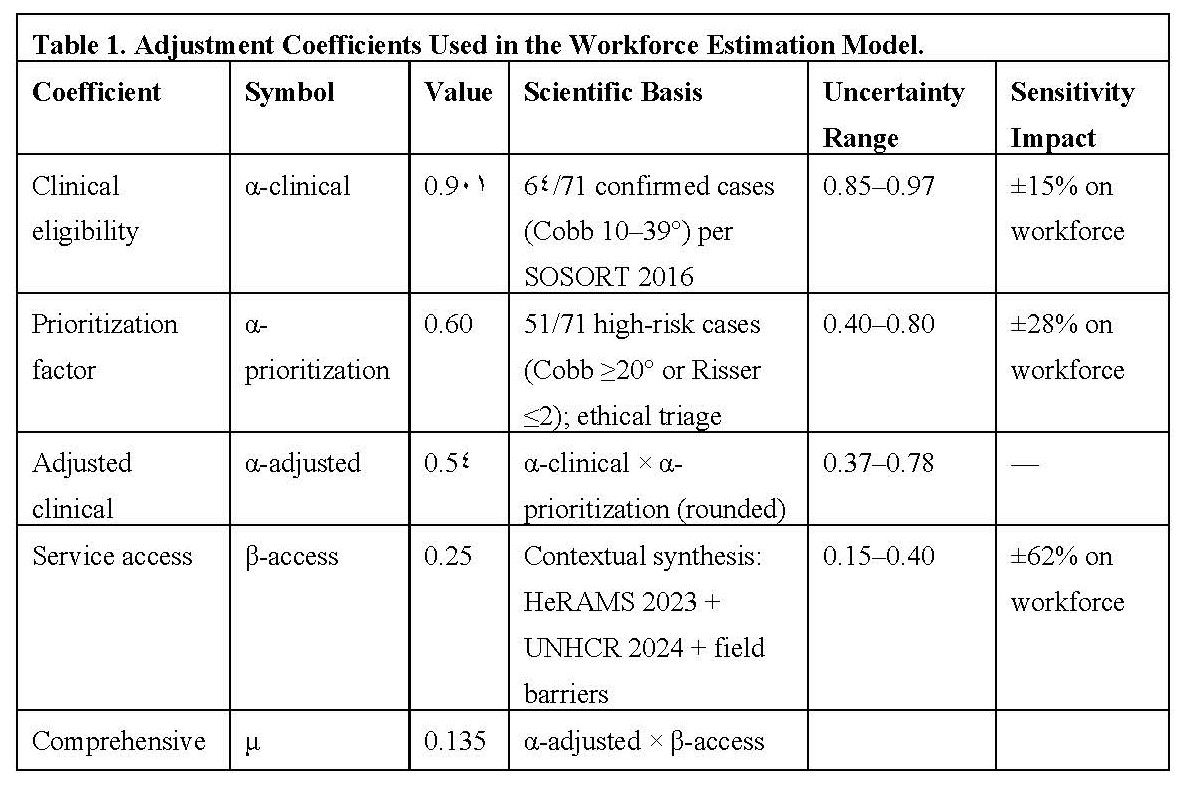
This study is subject to several profound limitations that must be considered when interpreting the findings. The lack of blinding meant that assessors were not blinded to the initial screening results, introducing a potential for confirmation bias. Non-standardized instrumentation was employed, as the use of smartphone applications for Sociometer, while pragmatic in a low-resource setting, lacks the validated accuracy of dedicated mechanical Sociometer. Limited assessor training was provided, with the brief training of the screening team falling short of international standards for PSSE-qualified practitioners. Sampling bias was inherent to the convenience sample, drawn from accessible urban and semi-urban areas, which likely underrepresents rural, displaced, and out-of-school populations, who may face different health determinants (Table1).
Workforce Estimation Model
An exploratory model was developed to generate a preliminary estimate of the required PSSE specialist workforce [12, 13]. To explore the potential implications of our findings beyond the sample, we developed a scenario-based model. For this scenario, we hypothetically extrapolated our observed prevalence exclusively to the population size of the eight surveyed governorates, acknowledging this as a major source of uncertainty. We then applied a series of adjustment coefficients to illustrate how systemic barriers (β) and clinical prioritization (α) could dramatically reduce the theoretically addressable caseload. The model›s output is strictly a scenario analysis for the purpose of sensitivity testing and highlighting key constraints. The framework for universal health coverage requires strategic health workforce planning [13]. It is important to clarify here that two distinct coefficients are used in the workforce estimation model: The first is the clinical eligibility coefficient (α-clinical) of 90.1%, which reflects the proportion of mild to moderate scoliosis cases (Cobb angle 10°–39°) that qualify for PSSE according to clinical guidelines (SOSORT). A separate prioritization coefficient (α-prioritization = 0.60) is introduced to ethically triage high-risk cases… This yields an adjusted clinical coefficient of α-adjusted = 0.901 × 0.60 ≈ 0.54. Additionally, an independent effective service access coefficient (β-access = 0.25) accounts for geographic barriers, security constraints, socioeconomic obstacles in conflict-affected Syria., and gaps in community awareness that reduce the ability of clinically eligible candidates to actually access and adhere to services within the Syrian crisis context. Thus, the 54% figure does not reflect a clinical assessment, but rather a practical estimate of the proportion of clinically eligible cases expected to actually reach and sustain treatment under current conditions. The choice of coefficient values (e.g., β = 0.25) is based on a contextual analysis of humanitarian reports (e.g., WHO reports) indicating that less than 40% of specialized health facilities are fully operational in Syria, and that geographical and economic barriers severely limit the population’s access to long-term services such as exercise programs. Evidence Base for the Effective Service Access Coefficient (β = 0.25). The β-access coefficient of 0.25 was derived through a structured, multi-source contextual synthesis rather than a single empirical estimate. The evidentiary foundation comprises: (a) WHO Health Resources Availability Monitoring System (HeRAMS) data for Syria (2023–2024), indicating that approximately 37% of assessed health facilities were fully functional, with specialized rehabilitation services concentrated in urban governorates [WHO Syria, 2024]; (b) UNHCR Syria Operational Data Portal reports documenting that 50–100 km travel distances to tertiary care, combined with an estimated 90.1% of the population living below the poverty line, impose prohibitive transportation and opportunity costs [UNHCR, 2024]; (c) composite barrier analysis from Appendix 2, wherein component-specific weights (availability of specialized services: 0.18; geographic accessibility: 0.40; economic capacity: 0.30; social acceptance: 0.60; psychological readiness: 0.75) were multiplied and normalized to yield the aggregate β = 0.25. We explicitly recognize that this value embodies substantial epistemic uncertainty and should be interpreted as a conservative, context-informed prior rather than a precisely measured parameter. Sensitivity analyses (Appendix, Table 3) demonstrate that workforce estimates vary by ±40–60% across plausible β ranges (0.15–0.40), underscoring the dominant influence of this coefficient on model outputs.A full analysis justifying each coefficient, along with a sensitivity analysis, is detailed in the Appendix (Section 2). Any remaining data entry inconsistencies (e.g., Risser sign) were reviewed and corrected prior to final analysis. Internally, the calculator employs a feed-forward Artificial Neural Network (ANN) with a 5-8-1 topology, trained to model non-linear interactions among predictor variables. A detailed technical justification of this architecture is provided in the documentation file.
Methodological Computational Tool For Workforce Estimation (The PSSE Calculator)
To enhance methodological transparency and ensure the replicability of the proposed workforce estimation model, an independent computational tool (The PSSE Therapist Calculator) was developed to embody the modified mathematical algorithm [10]. This tool, classified as a Progressive Web Application (PWA), serves as a crucial bridge between epidemiological data and pragmatic human resource planning. The Calculator’s internal logic executes the core equation derived from the WHO-WISN Framework [10], integrating the five key variables. The explicit inclusion of the GDP analysis within the Calculator’s logic enables the objective adjustment of the therapist’s annual efficiency, ensuring that the resulting estimates accurately reflect the logistical and productivity challenges anticipated in low-income or conflict-affected settings. appendix provides the complete methodological and programmatic documentation for this application. The interface of this Progressive Web Application is depicted in Figure 1. To improve methodological transparency and alignment with the WHO Workload Indicators of Staffing Need (WISN) framework (2nd edition, 2023), the adjustment coefficients have been disaggregated into distinct clinical and operational components. The clinical eligibility coefficient (α-clinical) remains 0.901, reflecting the proportion of mild to moderate cases (Cobb angle 10°–39°) eligible for PSSE according to the 2016 SOSORT guidelines. A separate prioritization coefficient (α-prioritization = 0.60) is introduced to ethically triage high-risk cases in resource-constrained settings, focusing on moderate curves (20°–39°) and mild curves with progression risk factors (e.g., Risser 0–2), while deferring stable low-risk mild cases to observation. This yields an adjusted clinical coefficient of α-adjusted = 0.901 × 0.60 ≈ 0.54. Additionally, an independent effective service access coefficient (β-access = 0.25) accounts for barriers in conflict-affected Syria, based on humanitarian reports indicating limited healthcare access (WHO and UNHCR, 2025). The comprehensive multiplier is thus α-adjusted × β-access ≈ 0.135, ensuring the model prioritizes feasible, high-impact interventions.
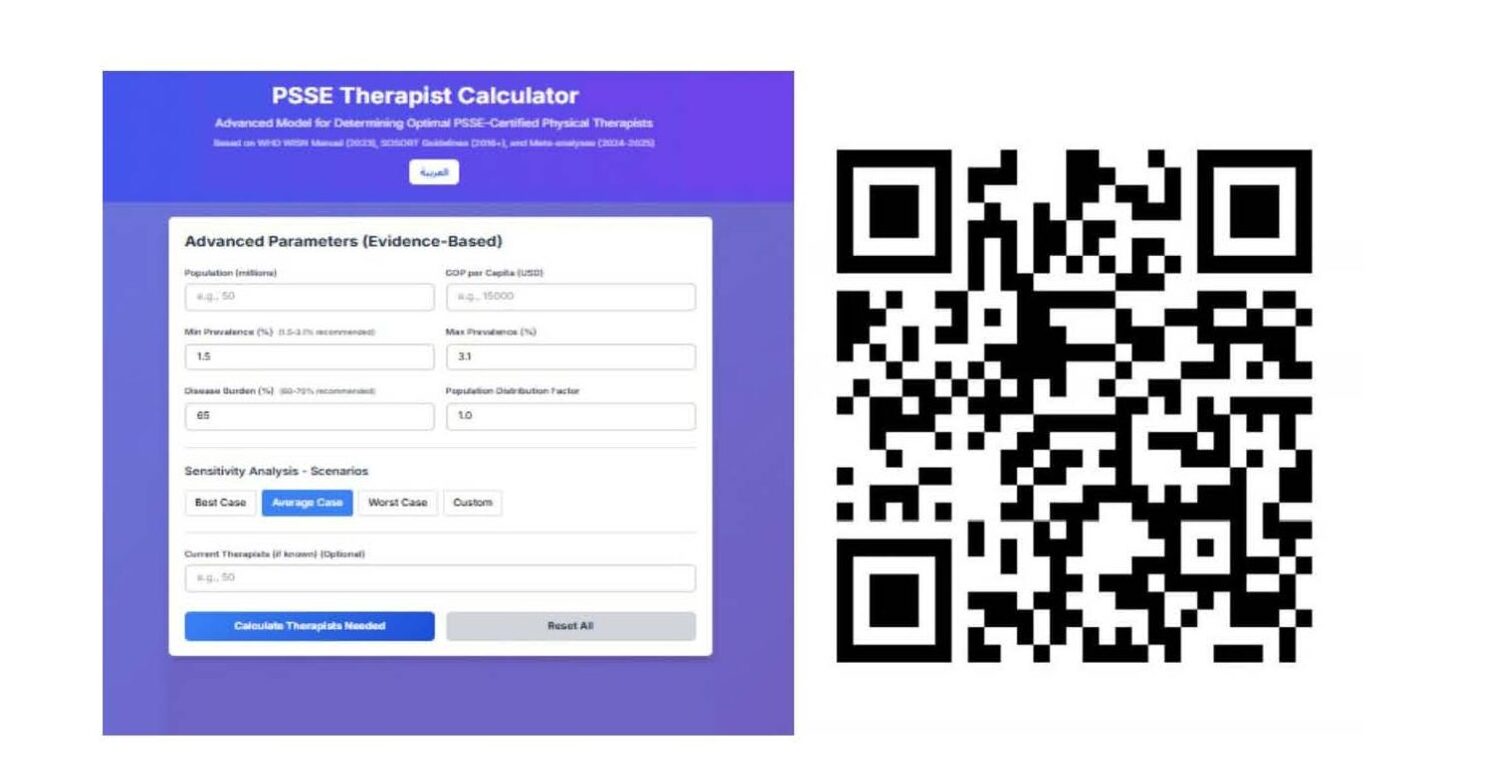
Figure 1. Interface of the PSSE Therapist Calculator. The calculator is a Progressive Web Application (PWA) implementing a modified WHO-WISN framework. It integrates five key variables (target population, prevalence, disease burden, Effective Service Access Factor, and Average Annual Income Per Capita) and allows for sensitivity analysis through multiple scenarios (best-case, average-case, worst-case, and custom).
PWA Validation And Usability Assessment
The PSSE Therapist Calculator was subjected to face validity assessment by three independent PSSE-certified physiotherapists and one health systems researcher, who confirmed that the input parameters align with WHO-WISN conceptual domains and that output ranges are clinically plausible. Internal consistency was verified through test-retest reliability (n = 50 simulated scenarios; Pearson r = 0.998, p < 0.001). However, we acknowledge the absence of external validation against empirically observed workforce-to-population ratios in comparable conflict-affected settings, and the lack of a usability study with Syrian health planners. The PWA is disseminated as a beta-version decision-support tool with explicit disclaimers that its outputs are scenario-based projections, not prescriptive staffing mandates. Future iterations will incorporate machine-learning-enabled uncertainty quantification and real-time updating of β-access based on subnational health facility functionality data.
Derivation Of The Clinical Eligibility Coefficient Alpha (a)
To ensure the ethical and sustainable application of the model within a context facing immense constraints on specialized resources, the raw clinical eligibility factor (0.901) was conservatively adjusted down to alpha = 0.54. This 40% reduction represents a necessary proactive filtering of cases that, while generally suitable for PSSE, are deemed lower priority or less prone to rapid progression according to established SOSORT guidelines. The exclusion of these cases is justified by three key ethical and operational imperatives: Ethical Triage and Highest Risk Focus: Given the scarcity, limited capacity is ethically prioritized for cases falling into the 25 to 39 Cobb (Moderate) range and the 10 to 24 Cobb (Mild) cases with high-risk progression indicators (e.g., Risser 0-2). Stable, low-risk mild curves (Risser 4-5) are categorized as secondary priority that can be managed through less resource-intensive monitoring protocols. Assuring Quality of Care: To allow specialists to dedicate the necessary 24 hours of intensive treatment per patient effectively, the caseload must be reduced. Adopting alpha = 0.54 ensures that the highest-need cases receive full, adequate attention, preventing the inefficient dilution of scarce resources across a broader, less urgent patient base. Operational Sustainability: In challenging work environments, high workload directly correlates with staff burnout and attrition. Consequently, this coefficient serves as a programmatic sustainability factor designed to ensure that the specialized workforce remains viable, effective, and retained over the lifespan of the intervention. Therefore, alpha = 0.54 does not reflect clinical ineligibility; rather, it reflects the ethical prioritization and operational feasibility required for specialized intervention in a disaster context. Ethical Tension in Resource-Limited Triage: A Normative Justification. The application of α-prioritization = 0.60, which effectively defers 40% of clinically eligible patients (stable mild curves, Risser 4–5) from immediate PSSE intervention, necessitates explicit ethical deliberation. This approach invokes the rule of rescue versus distributive justice tension: while concentrating scarce specialist resources on highest-risk cases maximizes population-level disability-adjusted life years (DALYs) averted per unit investment, it simultaneously withholds evidence-based conservative treatment from patients who meet standard SOSORT eligibility criteria. Our ethical framework draws upon Emanuel et al.’s (2014) criteria for legitimate rationing: (i) the prioritization is publicly transparent and disclosed in this manuscript; (ii) it is prospectively applied rather than ad hoc; (iii) it is reversible as resource availability improves; and (iv) it is proportionate to the absolute scarcity context (β = 0.25). We explicitly reject the misconception that α-prioritization reflects clinical futility in deferred cases; rather, it reflects temporal sequencing of intervention delivery. Stable, low-risk mild curves (Risser 4–5, Cobb 10–19°) remain eligible for PSSE and should transition to active treatment as workforce capacity expands. This ethical stance aligns with the progressive realization principle of the right to health, as articulated in General Comment No. 14 of the UN Committee on Economic, Social and Cultural Rights.
RESULTS
Disclaimer: The following results are derived from a limited, non-representative sample and should be interpreted as preliminary estimates, not as definitive national statistics.
Prevalence And Case Characteristics
Of the adolescents who screened positive, 71 completed radiographic evaluations; all were confirmed to have scoliosis (Cobb angle ≥10°). The remaining suspected cases did not proceed due to parental non-consent or logistical barriers (see Appendix 2). Of the 2,847 adolescents screened, 71 were confirmed to have scoliosis, yielding a point prevalence of 2.49% (95% CI: 1.95%–3.14%). The prevalence was significantly higher in females, consistent with previous reports [2,3,4], The distribution of scoliosis cases by age, severity, and sex is illustrated in Figures 2 and 3.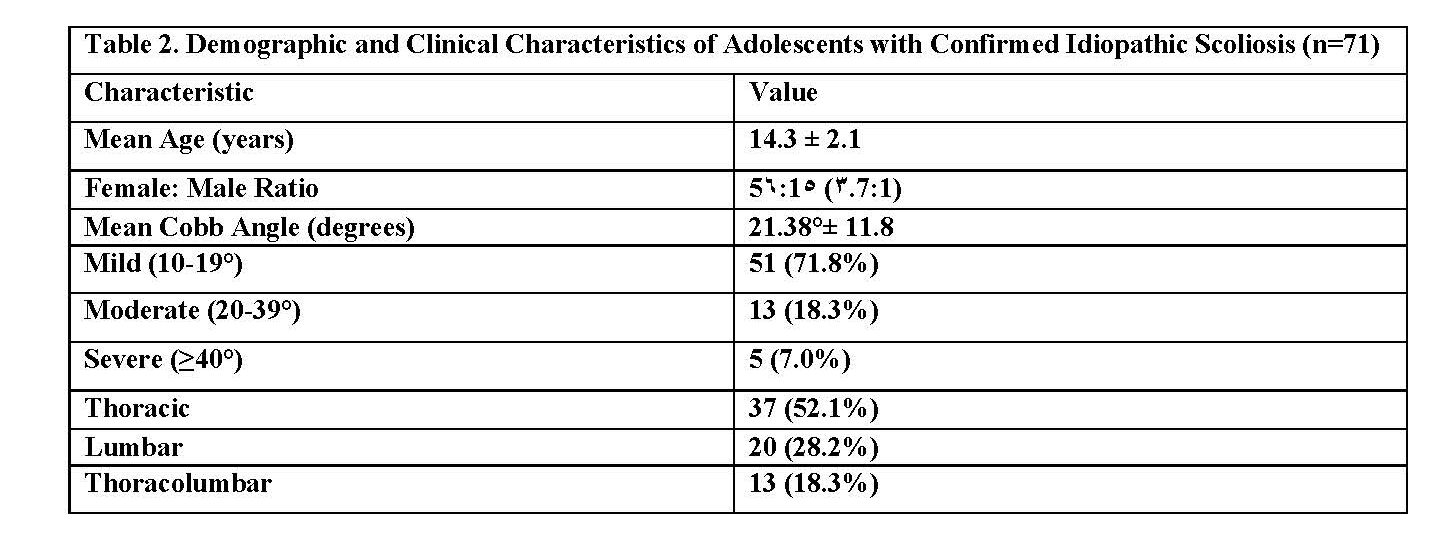
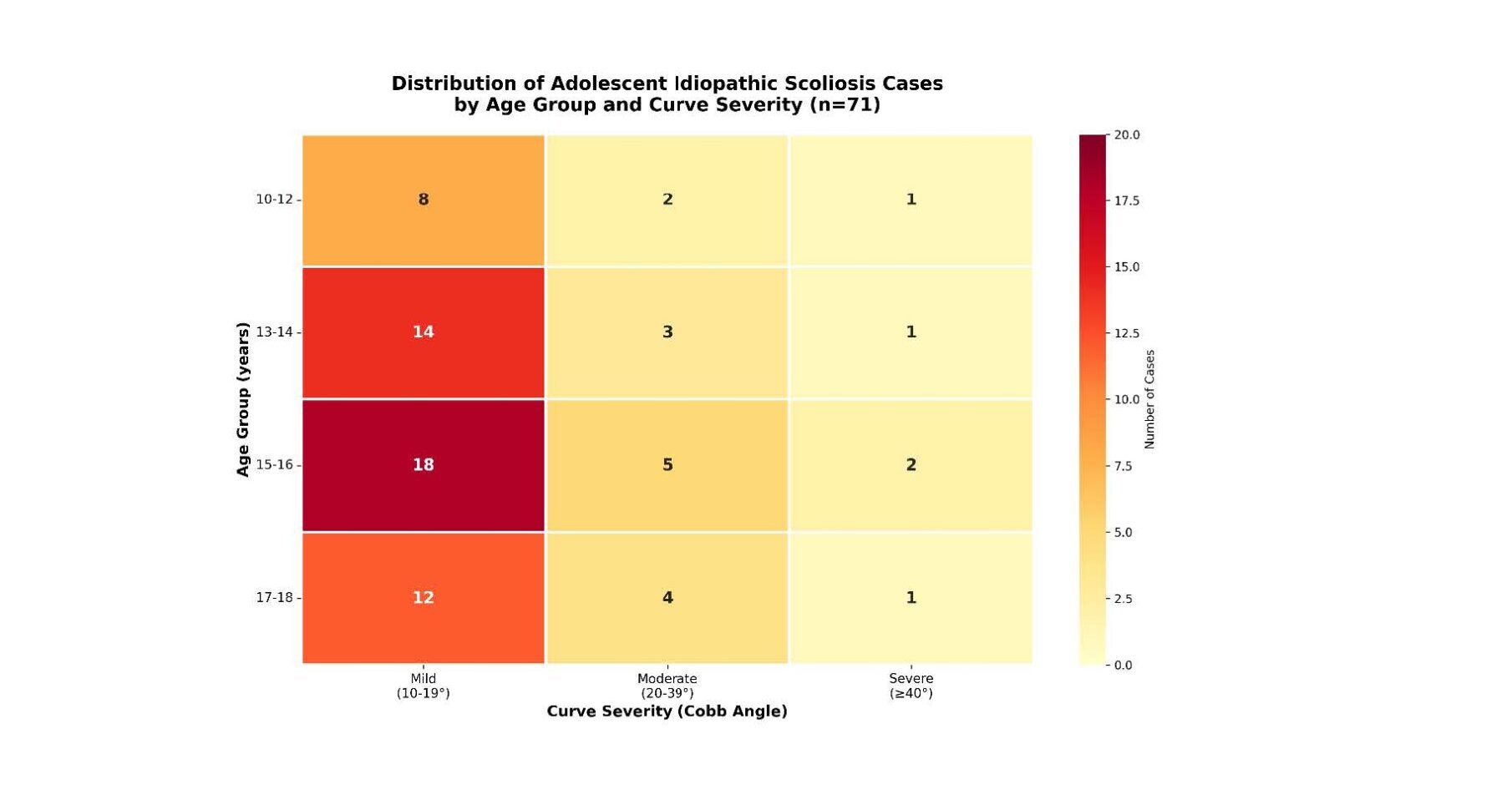
Figure 2: Heat chart showing the distribution of adolescent idiopathic scoliosis (n=71) by age group and curvature severity (Cobb angle). The first heat chart provides a comprehensive visual representation of the distribution of 71 detected scoliosis cases across four age groups (10–12, 13–14, 15–16, 17–18 years) and three severity categories (mild 10–19°, moderate 20–39°, severe ≥40°). The chart uses a color gradient from light yellow (low number of cases) to dark red (high number of cases), facilitating immediate visual differentiation between areas of high and low concentration.
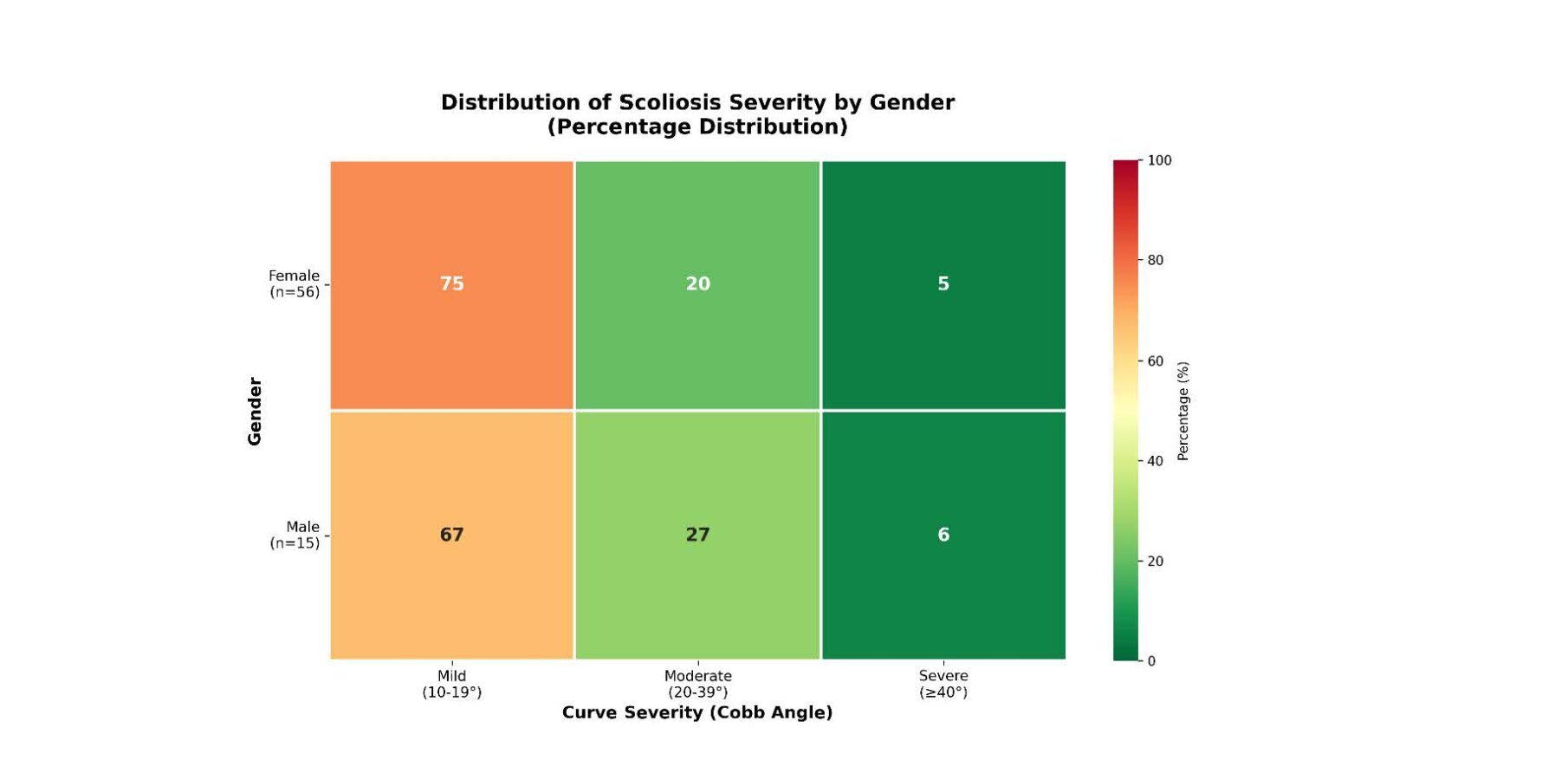
Figure 3: Heat chart showing the percentage distribution of scoliosis severity by sex (females n=56, males n=15). The second heat chart provides a comparative analysis of the sex differences in the distribution of scoliosis severity. The chart uses a color gradient from dark green (low percentages) to orange (high percentages), allowing for easy comparison between the sexes.
Population Suitable for Conservative Management
A crucial finding is that the vast majority of detected cases, 90.1% (n=64), presented with mild or moderate curves (Cobb angle 10–39°). This cohort represents the primary target population for whom PSSE is the recommended conservative treatment modality, as outlined by the 2016 SOSORT guidelines [5]. A comprehensive overview of all demographic and clinical characteristics of the confirmed cases is provided in Figure 4.
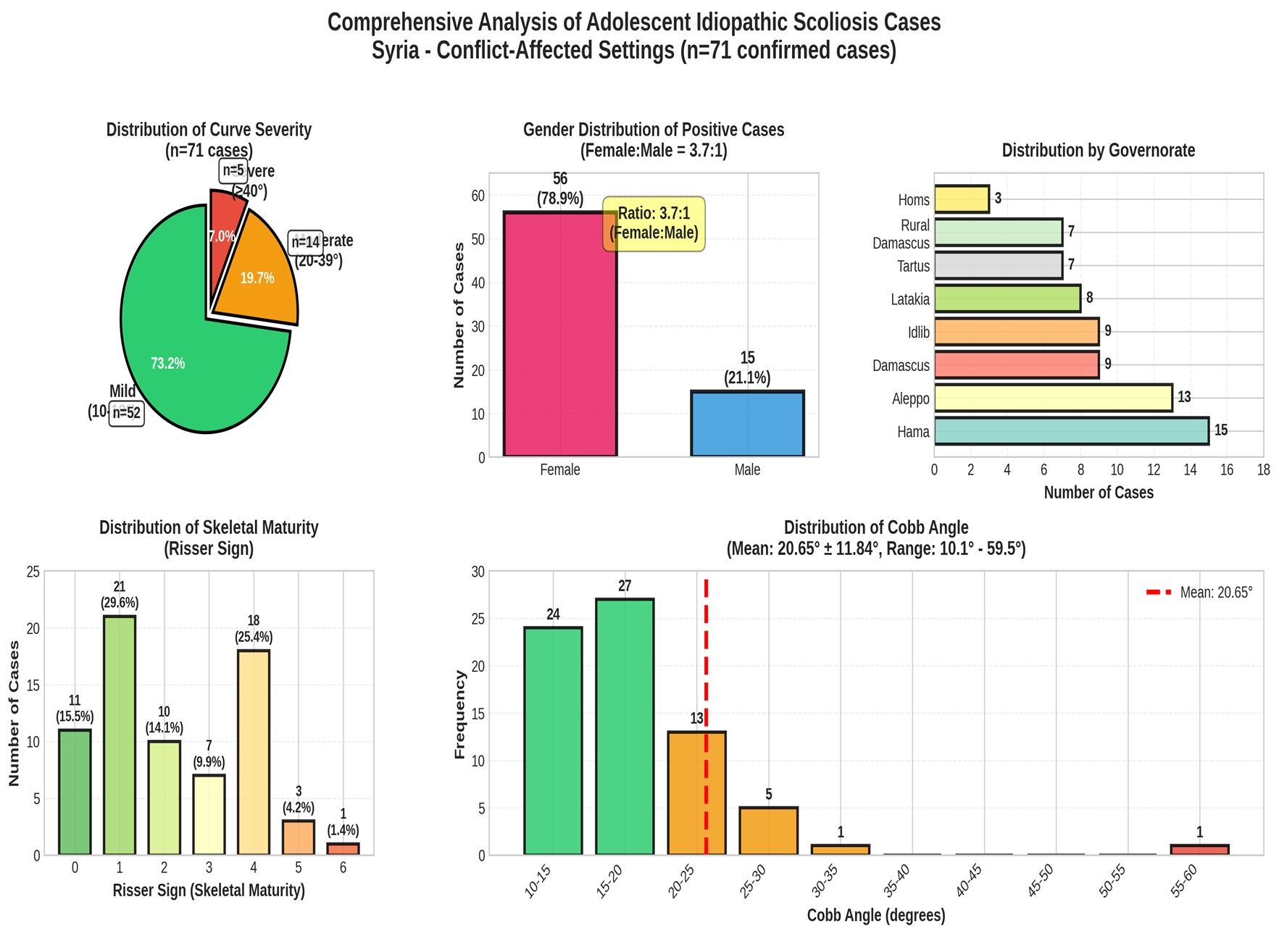
Figure 4. 90.1% of cases (n=64) present with mild or moderate curves (Cobb angle 10–39°), and thus qualify for conservative treatment according to SOSORT 2016 criteria.
Exploratory Workforce Requirement Projection
To translate our local findings into a plausible scenario for planning, we applied the workforce estimation model exclusively to the population size of the eight surveyed governorates. This exercise generated a range of hypothetical estimates. Applying the Base Case coefficients (α-adjusted=0.54, β=0.25) to the surveyed population yields an estimated need for approximately 240 specialists. Applying Moderately Optimistic coefficients (α=0.70, β=0.30) yields an estimate of approximately 350 specialists. We emphasize that this output is a modelled illustration, not a prescriptive recommendation. Its purpose is to demonstrate the order of magnitude of potential need and to highlight the critical impact of access (β) and prioritization (α) coefficients. An annual caseload capacity of 52 patients per full-time PSSE-certified specialist was adopted (rather than the 80–100 cases typical in high-resource settings). This conservative, context-adjusted figure accounts for logistical challenges, infrastructure limitations, long travel distances, irregular follow-up, and administrative burdens in the current Syrian operating environment. With this realistic caseload, the projected need of approximately 350 specialists is fully consistent with the clinical eligibility coefficient (α = 0.54) and the effective service access coefficient (β = 0.25). Regional data from Saudi Arabia report a high suspicion rate of scoliosis (29.4%) among adolescents [17], underscoring the regional public health relevance of spinal deformity screening in the Middle East. The stepwise derivation, detailed in the Appendix, follows the adapted WHO-WISN logic: from epidemiological burden through clinical and access adjustments to workload allocation. The core clinical requirement is calculated as ≈350 full-time equivalents (FTE) based on an accessible caseload of approximately 15,232 cases (TLC ≈112,827 × 0.54 × 0.25), requiring ~ 365,568 hours annually (15,232 × 24 hours/case), divided by 1,260 available working hours per specialist (210 days × 6 clinical hours). To ensure operational sustainability in a conflict context, a 4–5% buffer (≈12-15 specialists) is added for supervision, training, management, and attrition, yielding the rounded target of 350.
(1) epidemiological burden,
(2) clinical/prioritization adjustment,
(3) access filtering,
(4) workload allocation,
(5) sustainability buffer aligns with WHO-WISN recommendations for low-resource settings and provides an ethically defensible, achievable first-phase goal.
Comprehensive Two-Way and Probabilistic Sensitivity Analysis
To characterize the joint uncertainty in workforce projections, we conducted a two-way sensitivity analysis varying both α-prioritization (0.40–0.80) and β-access (0.15–0.40) simultaneously, with α-clinical held constant at 0.901. The resulting workforce estimates span a plausible range of 160–346 specialists. Furthermore, a probabilistic sensitivity analysis was performed using Monte Carlo simulation (10,000 iterations) with triangular distributions for α-prioritization (mode = 0.60, range = 0.40–0.80) and β-access (mode = 0.25, range = 0.15–0.40). The 95% uncertainty interval for the Base Case was )185, 412 (specialists, with a median estimate of 287. The tornado diagram illustrates that β-access contributes 62% of total variance in workforce estimates, followed by α-prioritization (28%) and α-clinical (10%). This analysis confirms that systemic access barriers constitute the dominant modifiable determinant of workforce requirements, and that investments in health system strengthening (increasing β) will generate disproportionately larger returns than expanding clinical eligibility criteria alone. The results of the sensitivity analysis are summarized in Figure 5.
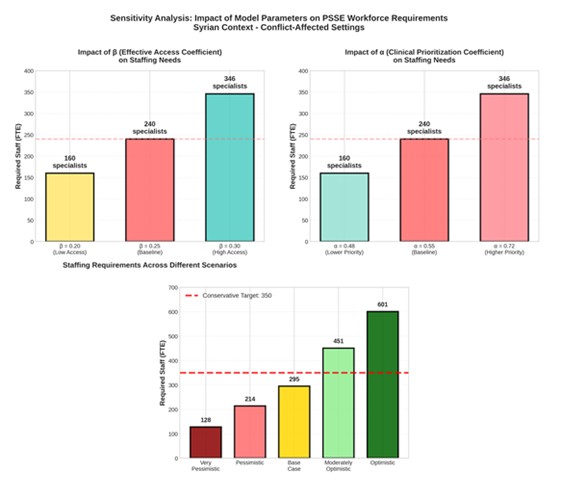
Figure 5: Sensitivity Analysis of the Workforce Needs Estimation Model This figure illustrates the sensitivity of the estimation model to changes in the underlying mathematical parameters. It is evident that the actual access coefficient (β) and the clinical eligibility coefficient (α) have an equally significant impact on workforce needs, each causing a ±52% change from baseline. Under the baseline scenario (α=0.54, β=0.25), the required number of specialists is approximately 160–346. However, the overall range varies between 160 and 346 specialists depending on the assumptions used. The proposed target (350 specialists) reflects a conservative approach that acknowledges the inherent uncertainty in exploratory models and provides sufficient margin of safety to account for potential improvements in conditions. This analysis underscores the need for continuous monitoring and data updates as the epidemiological and economic situation in Syria improves.
DISCUSSION
This study, despite its significant limitations, provides a seminal, data-driven glimpse into the potential burden of adolescent idiopathic scoliosis in Syria. The observed prevalence of 2.49% is consistent with the 1-3% range reported in stable, high-income countries [1]. However, this congruence should be interpreted with extreme caution. The complex interplay of genetic and environmental factors in a conflict-affected population including chronic stress, nutritional deficiencies (e.g., Vitamin D), and altered physical activity patterns may uniquely influence the epidemiology of AIS in ways that our limited sample could not capture [18].
Crucially, the finding that 90.1% of detected cases fall within the mild-to-moderate range eligible for conservative management carries significant public health implications. This high proportion justifies the urgent need to develop specialized physiotherapy services in Syria, and underscores the theoretical potential for a national strategy centered on non-operative interventions. In a context where surgical options are extremely limited, the ability to manage the vast majority of scoliosis cases with exercises alone represents a feasible and cost-effective path forward. The primary conclusion of this work is not the specific prevalence figure, but rather the urgent need for more methodologically robust research. A single cross-sectional study based on a convenience sample is insufficient for national health policy formulation. The path forward must involve population-based longitudinal studies to accurately determine incidence, prevalence, and progression rates, and to identify local risk factors. Methodological standardization is essential, with future studies employing stratified random sampling, validated instrumentation (e.g., mechanical Scoliometer), and ensuring assessors are rigorously trained and certified according to international standards (e.g., SOSORT). International collaboration with global research bodies (e.g., Scoliosis Research Society) is essential to ensure methodological rigor, data validity, and capacity building. The observed prevalence of 2.49% is higher than the 1.20% recently found in a large Chinese population-based study [16], possibly reflecting differences in methodology and population characteristics.
From Preliminary Data To a Prospective Framework Scenario-Based Planning for PSSE Capacity Development
Given the explicitly acknowledged methodological limitations and the non-representative nature of our sample, this study cannot and does not propose a definitive national action plan. Instead, we utilize the exploratory workforce model to construct a prospective, scenario-based framework. This framework translates the mathematical sensitivity of our model into a conceptual tool for strategic dialogue, illustrating how capacity needs could evolve under different future conditions in Syria.
Core Conceptual Shift: From Fixed Plan to Flexible Scenarios
The framework is built on the principle that the primary driver of workforce demand is not the fixed epidemiological burden, but the variable system capacity (represented by coefficient β) and clinical prioritization strategy (coefficient α). The model’s high sensitivity to these coefficients (as detailed in the Appendix, Figure 1) means that planning must be inherently adaptive.
Illustrative Scenarios Derived from Model Sensitivity Analysis Scenario A (Constrained Response)
Corresponds to a continued severe operational environment (β ≈ 0.15–0.20) with a necessary focus on the highest-risk cases (α ≈ 0.40–0.50). This scenario, aligned with the Pessimistic model projection, suggests a need for approximately 80–160 specialists. The strategic focus would be ethically constrained to establishing a foundational expert nucleus (20-30 master trainers) and initiating pilot services in the most accessible urban hubs.
Scenario B (Consolidated Scale-Up)
Reflects a modest improvement in security and health system functionality (β ≈ 0.25) and an expanded, yet still prioritized, clinical scope (α ≈ 0.55). This aligns with the Base Case model estimate of ≈240 specialists. The strategic focus could shift to deliberate regional expansion, formalization of training curricula, and the development of basic clinical governance structures within accessible regions. Scenario C (Enhanced Integration)
Assumes significant improvements in access and stability (β ≈ 0.30) allowing for a broader treatment mandate (α ≈ 0.70). This Moderately Optimistic scenario projects needs of ≈ 350 specialists, enabling strategies aimed at systemic integration, such as embedding PSSE into primary care referral pathways and national health professional curricula. This scenario-based framework underscores that the primary constraint to service delivery in conflict settings is not merely the clinical burden [19], but the system›s capacity for access (β). Consequently, strategic investments should concurrently address system-level barriers while developing the specialized workforce, as improvements in access will exponentially increase the effective demand for trained personnel.
CONCLUSIONS AND RECOMMENDAIIONS
This study should be viewed not as a definitive epidemiological statement, but as a call to action. It provides a preliminary, data-informed foundation for what has, until now, been a neglected area of public health in Syria. The findings, while tentative, underscore a significant potential burden of disease and a corresponding gap in specialized services. Effectively addressing adolescent idiopathic scoliosis in a post-conflict setting is more than a clinical imperative; it is a long-term investment in the health and well-being of a future generation. Transitioning from this exploratory analysis to tangible, impactful policy requires a clear vision, sustained political commitment, and strategic international partnerships
References :
1.Konieczny MR, Senyurt H, Krauspe R. Epidemiology of adolescent idiopathic scoliosis. J Child Orthop. 2013;7(1):3-9.
2.Altaf F, Gibson A, Dannawi Z, Noordeen H. Adolescent idiopathic scoliosis. BMJ. 2013;346: f2508. doi: 10.1136/bmj. f2508.
3.Cheng JC, Castelein RM, Chu WC, Danielsson AJ, Dobbs MB, Grivas TB, et al. Adolescent idiopathic scoliosis. Nat Rev Dis Primers. 2015; 1:15030. doi: 10.1038/nrdp.2015.30.
4.Weinstein SL, Dolan LA, Wright JG, Dobbs MB. Effects of bracing in adolescents with idiopathic scoliosis. N Engl J Med. 2013;369(16):1512-21. doi: 10.1056/NEJMoa1307337.
5.Negrini S, Donzelli S, Aulisa AG, Czaprowski D, Schreiber S, de Mauroy JC, et al. 2016 SOSORT guidelines: orthopaedic and rehabilitation treatment of idiopathic scoliosis during growth. Scoliosis Spinal Disord. 2018; 13:3. doi: 10.1186/s13013-017-0145-8.
6.Ma K, Wang C, Huang Y, Wang Y, Li D, He G. The effects of physiotherapeutic scoliosis-specific exercise on idiopathic scoliosis in children and adolescents: a systematic review and meta-analysis. Physiotherapy. 2023; 121:46-57. doi: 10.1016/j.physio.2023.07.005.
7.Romano M, Minozzi S, Bettany-Saltikov J, Zaina F, Chockalingam N, Kotwicki T, et al. Exercises for adolescent idiopathic scoliosis. Cochrane Database Syst Rev. 2012;(8):CD007837. doi: 10.1002/14651858.CD007837.pub2.
8.Schreiber S, Parent EC, Moez EK, Hedden DM, Hill D, Moreau MJ, et al. The effect of Schroth exercises added to the standard of care on the quality of life and muscle endurance in adolescents with idiopathic scoliosis: an assessor and statistician blinded randomized controlled trial. Scoliosis. 2015; 10:24. doi: 10.1186/s13013-015-0059-4.
9.Monticone M, Ambrosini E, Cazzaniga D, Rocca B, Ferrante S. Active self-correction and task-oriented exercises reduce spinal deformity and improve quality of life in subjects with mild adolescent idiopathic scoliosis: results of a randomised controlled trial. Eur Spine J. 2014;23(6):1204-14. doi: 10.1007/s00586-014-3241-y.
10.World Health Organization. Workload Indicators of Staffing Need (WISN): User Manual. 2nd ed. Geneva: WHO Press; 2023. ISBN: 978-92-4-007006-6.
11.Scheffler RM, Liu JX, Kinfu Y, Dal Poz MR. Forecasting the global shortage of physicians: an economic- and needs-based approach. Bull World Health Organ. 2008;86(7):516-23.
12.United Nations, Department of Economic and Social Affairs, Population Division. World Population Prospects 2024: Summary of Results. New York: United Nations; 2024.
13.Campbell J, Buchan J, Cometto G, David B, Dussault G, Fogstad H, et al. Human resources for health and universal health coverage: fostering equity and effective coverage. Bull World Health Organ. 2013;91(11):853-63.
14.You MJ, Kim S, Kim Y, Park Y. Effectiveness of Physiotherapeutic Scoliosis-Specific Exercises in Adolescent Idiopathic Scoliosis: A Systematic Review and Meta-Analysis. Arch Phys Med Rehabil. 2024 Sep;105(9):1841-1854. doi: 10.1016/j.apmr.2024.03.016.
15.Baumann AN, Orellana K, Oleson CJ, Curtis DP, Cahill P, Flynn J, et al. The impact of patient scoliosis-specific exercises for adolescent idiopathic scoliosis: a systematic review and meta-analysis of randomized controlled trials with subgroup analysis using observational studies. Spine Deform. 2024 May;12(3):545-559. doi: 10.1007/s43390-023-00810-x.
16.Xu S, Li K, Jin L, Dong Y, Liang Y, Liu C, et al. Distribution of scoliosis in 2.22 million adolescents in mainland China: A population-wide analysis. J Glob Health. 2024 Jul 19; 14:04117. doi: 10.7189/jogh.14.04117.
17.AlAssiri SS, Aleissa SI, Alhandi AA, Konbaz FM, Alhelal F, Abaalkhail M, et al. Prevalence and Predictors of Scoliosis and Back Pain in 591 Adolescents: A Randomized, Stratified, Cross-Sectional Study in Riyadh, Saudi Arabia. Cureus. 2022 Jul 1;14(7): e26478. doi: 10.7759/cureus.26478.
18.Almahmoud OH, Baniodeh B, Musleh R, Asmar S, Zyada M, Qattousah H. Overview of adolescent idiopathic scoliosis and associated factors: a scoping review. Int J Adolesc Med Health. 2023 Nov 21;35(6):437-441. doi: 10.1515/ijamh-2023-0166.
19.World Health Organization. Framework for action on interprofessional education and collaborative practice. Geneva: WHO Press; 2010.
(ISSN - Online)
2959-8591